7 Small Laundry Room Organization Ideas for a Tidy, Functional Space
7 Small Laundry Room Organization Ideas for a Tidy, Functional Space
A laundry space can work beautifully even when your washer and dryer share a small closet or narrow room. These seven small laundry room organization ideas focus on safe product storage, manageable sorting, a useful folding routine, and simple ways to keep the area clear. Each idea can be adapted to your current space without an expensive remodel. Start by measuring the area and working with the storage you already have.
In This Article
- Measure Your Washer, Dryer, and Walking Space
- Store Detergents Safely in a Cabinet or Closet
- Use a Small Laundry Basket System for Sorting
- Create One Practical Spot for Folding Clothes
- Give Clean Towels a Dedicated Shelf
- Use a Foldable Rack for Air-Drying Items
- Finish With a Five-Minute Laundry Room Reset
1. Measure Your Washer, Dryer, and Walking Space
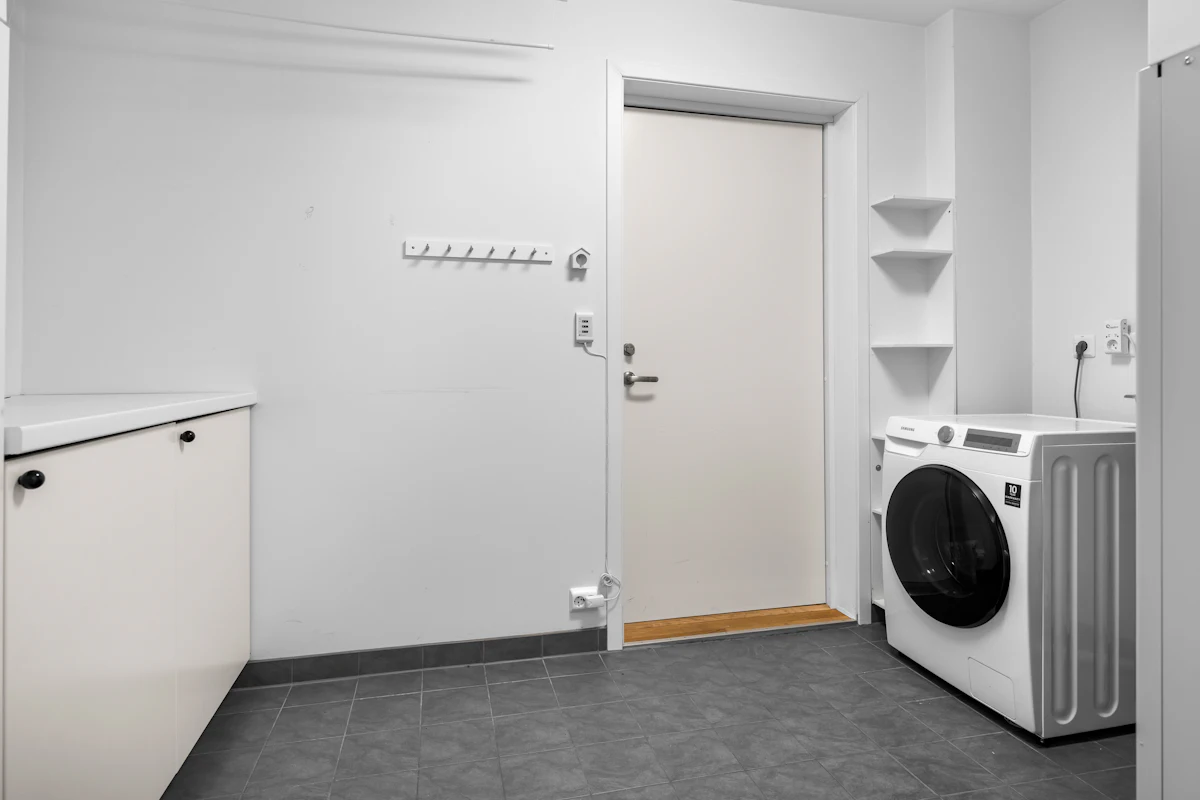
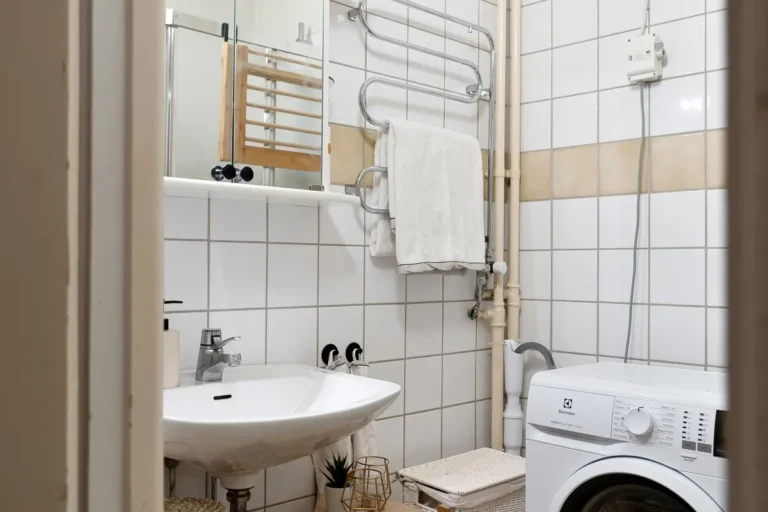
The photograph shows a washer and dryer arranged in a compact utility space, with the appliances taking up much of the usable area. It does not show someone measuring, but it is a helpful reminder to plan storage around the machines you actually have. Start by measuring the wall, the width of the walkway, and the space each appliance door needs when fully open. Check the washer and dryer manuals for required clearance around ventilation, hoses, electrical connections, and maintenance access. Then walk through a typical load while carrying a laundry basket: can you reach the washer, transfer clothes, and turn around without squeezing past a shelf? If you are considering a narrow cart, mark its proposed footprint on the floor with painter’s tape before buying it. A cart that blocks a door or makes the room difficult to walk through is not useful storage. In a laundry closet, also check that the closet doors can open and close without interfering with the machines or required airflow. Measure first, then choose only the storage that fits the space safely.
2. Store Detergents Safely in a Cabinet or Closet
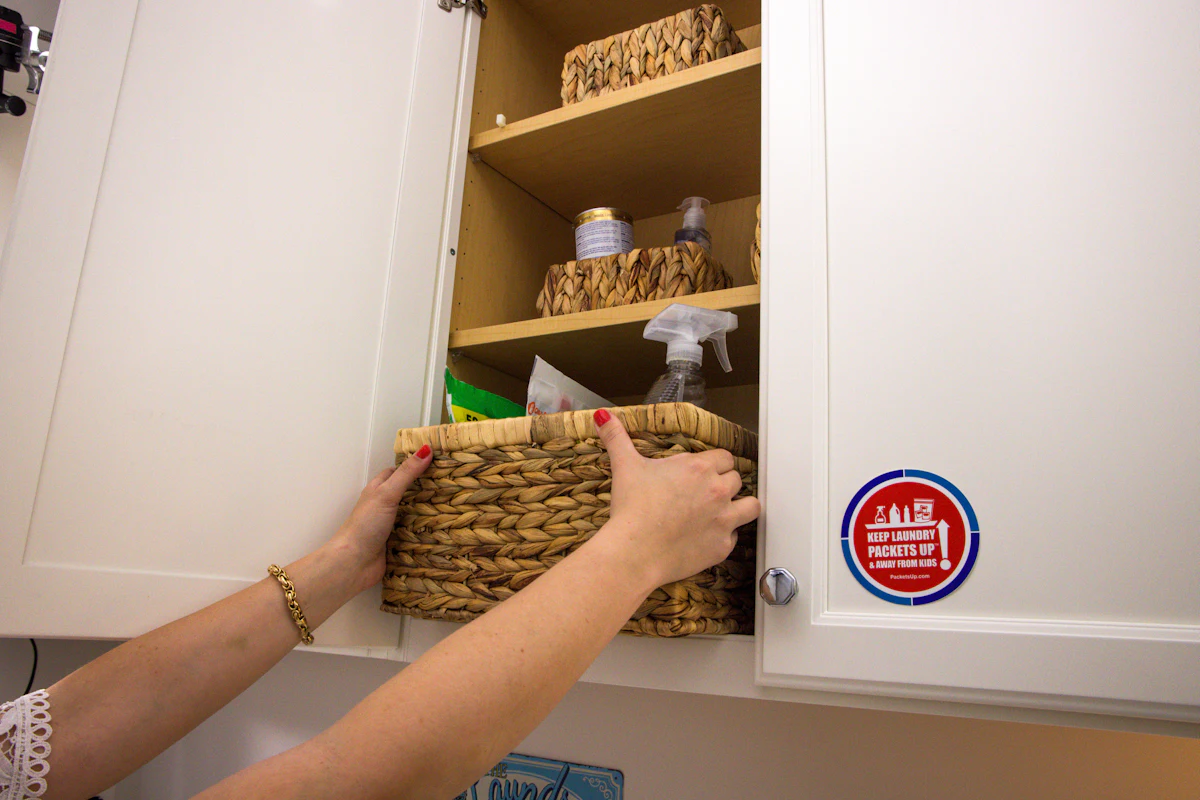
In the photograph, hands slide a woven basket containing laundry products into a cabinet. It is a useful example of keeping products contained without placing colorful detergent packages on display. Choose a secure, preferably lockable cabinet or closet that children and pets cannot access, and keep detergents in their original, clearly labeled packaging. A decorative basket may help group the original bottles or packages, but it is not a safety lock by itself. The American Cleaning Institute advises storing cleaning products out of reach and sight, replacing the lid after each use, and following label directions. Do not pour detergent or liquid laundry packets into glass jars, drink bottles, or unlabeled containers for a matching aesthetic; that removes important safety information and can lead to accidental exposure. Separate stain treatment tools and clean cloths from chemicals, and do not store cleaning products beside food. When the wash cycle is started, return every product to its designated secure place rather than leaving it on the machine. An organized room should be safe first and visually calm second.
3. Use a Small Laundry Basket System for Sorting
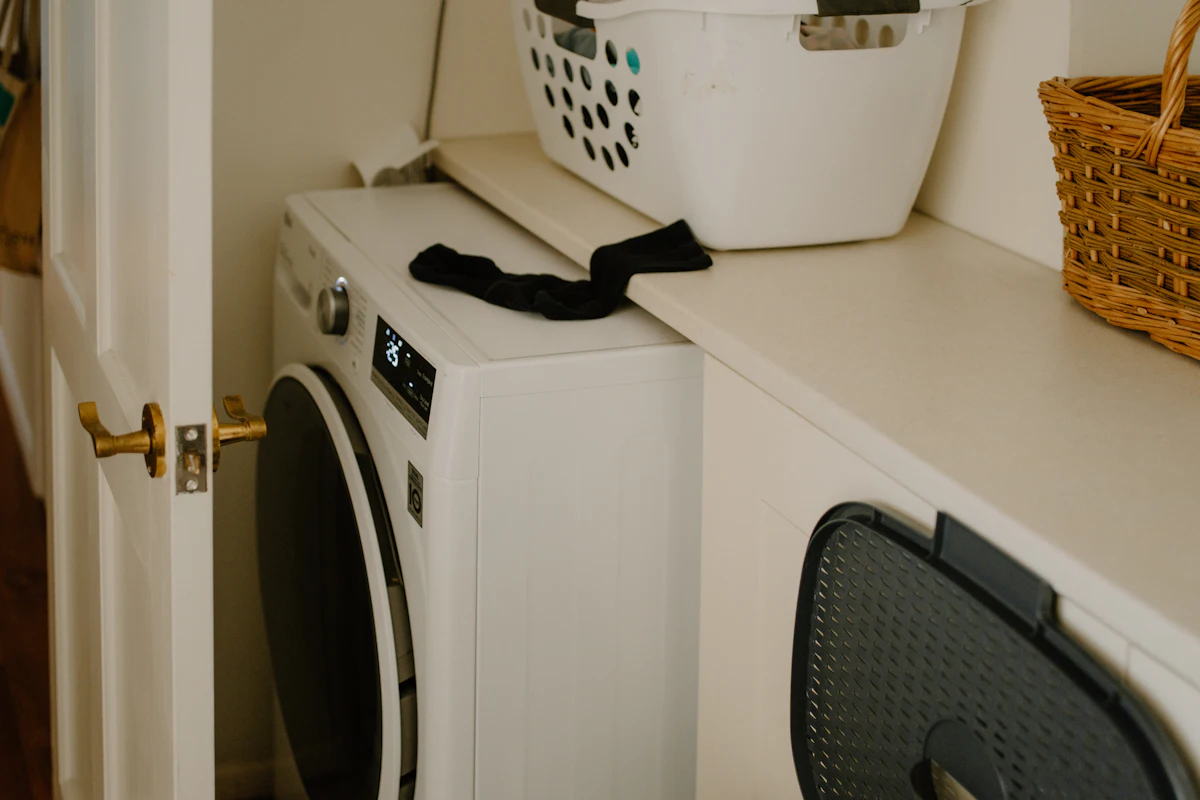
The photograph shows a laundry basket beside a white washing machine, with a loose sock nearby. It does not show separate sorting bins, but it does show why giving clothes a specific place to go is useful. Begin with one hamper that fits beside your machine without blocking its door or the walking space. If your household regularly sorts several types of laundry, add a second basket or a removable divider only when there is room for it. Separate loads according to garment care labels, fabric type, color, and washing needs rather than assuming that every item belongs in a simple light-or-dark category. The American Cleaning Institute’s laundry basics explains how to sort loads and follow care instructions. Keep a small, clearly designated pouch or basket for single socks like the one pictured, so they can be matched after the next load instead of scattered across the floor. Choose baskets with handles if you carry clothes from bedrooms, and move damp laundry promptly rather than letting it sit in a closed hamper. One well-placed basket can improve a small laundry room more than several decorative containers.
4. Create One Practical Spot for Folding Clothes
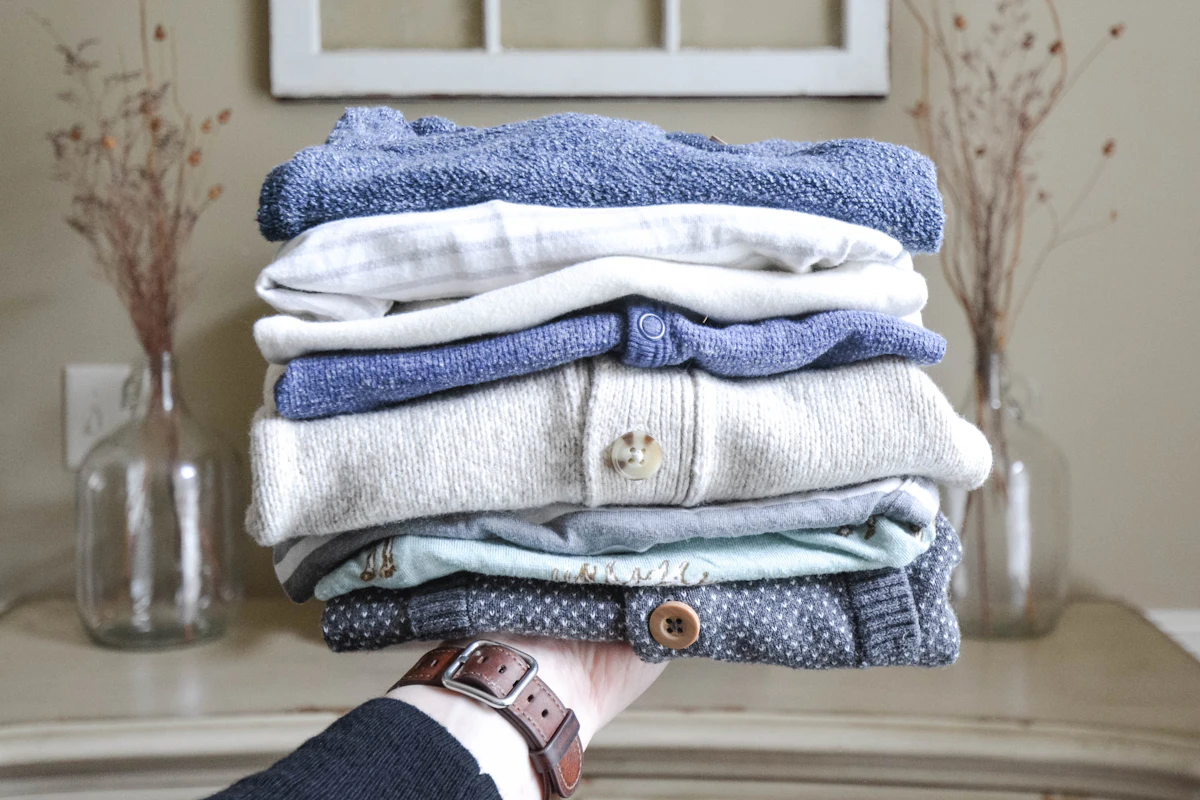
The photograph shows a person holding an already-folded stack of clothes. It illustrates the result you want from a folding routine, rather than showing a built-in folding counter. To make that result easier, choose one stable, clear surface where you can fold clothes comfortably. This might be an existing counter, a nearby table, or a worktop specifically designed and safely installed for your appliance setup. Do not balance a loose board over a running washer or dryer, and never cover vents or required access points. As clothes come out of the dryer or off the drying rack, fold similar items together and make separate small stacks for the rooms where they belong. The shirts and sweaters in the picture are a good reminder to keep stacks manageable so they are easy to carry without toppling. Hang items that should not be folded and check garment labels for special care. If you have no spare surface inside the laundry room, take one basket to a table elsewhere; it is better to have a safe routine than to squeeze in furniture that blocks the room. Our small entryway organization ideas use the same principle of creating practical places for everyday items.
5. Give Clean Towels a Dedicated Shelf

The folded towels on the wooden shelf in this image illustrate a useful rule: clean linens should have a consistent, accessible destination. If your laundry room has shelves, reserve one area for towels or the clean items that are often needed nearby. Keep the stack small enough that you can remove the bottom towel without toppling the rest. A shallow basket can keep washcloths together, but do not use fabric storage baskets to hide detergents where children could reach them. Store only thoroughly dry linens, away from damp corners and spills, and leave room for ventilation. If your bathroom is close by, it may be more practical to store most towels there and keep only a small backup stack in the laundry area. The aim is to avoid turning the top of the dryer into permanent storage. For coordinated linen storage in a tight room, our small bathroom storage ideas include baskets and shelves that can be adapted to available space. Maintain a clear distinction between clean linens, items awaiting washing, and cleaning supplies.
6. Use a Foldable Rack for Air-Drying Items

The metal rack in the photograph is holding baby clothes and small garments indoors. It shows how a portable drying area can support delicate pieces without permanently taking up an entire wall. Choose a rack that fits fully inside an available floor area when opened and folds away neatly when not needed. Do not position it across a doorway or escape route, in front of electrical equipment, or so close to a heater that fabrics could touch a hot surface. Spread clothes with enough space for air to circulate, place the rack in a well-ventilated area, and put everything away once dry so the laundry space remains usable. Follow the garment label for pieces that should be laid flat rather than hung. ENERGY STAR notes that air-drying items when practical can reduce dryer energy use. If you have only a tiny closet, a folding rack used in a different room may be safer and more comfortable than squeezing it beside the appliances. Adapt the drying method to your home; there is no need to install wall hardware unless you truly have a suitable spot.
7. Finish With a Five-Minute Laundry Room Reset
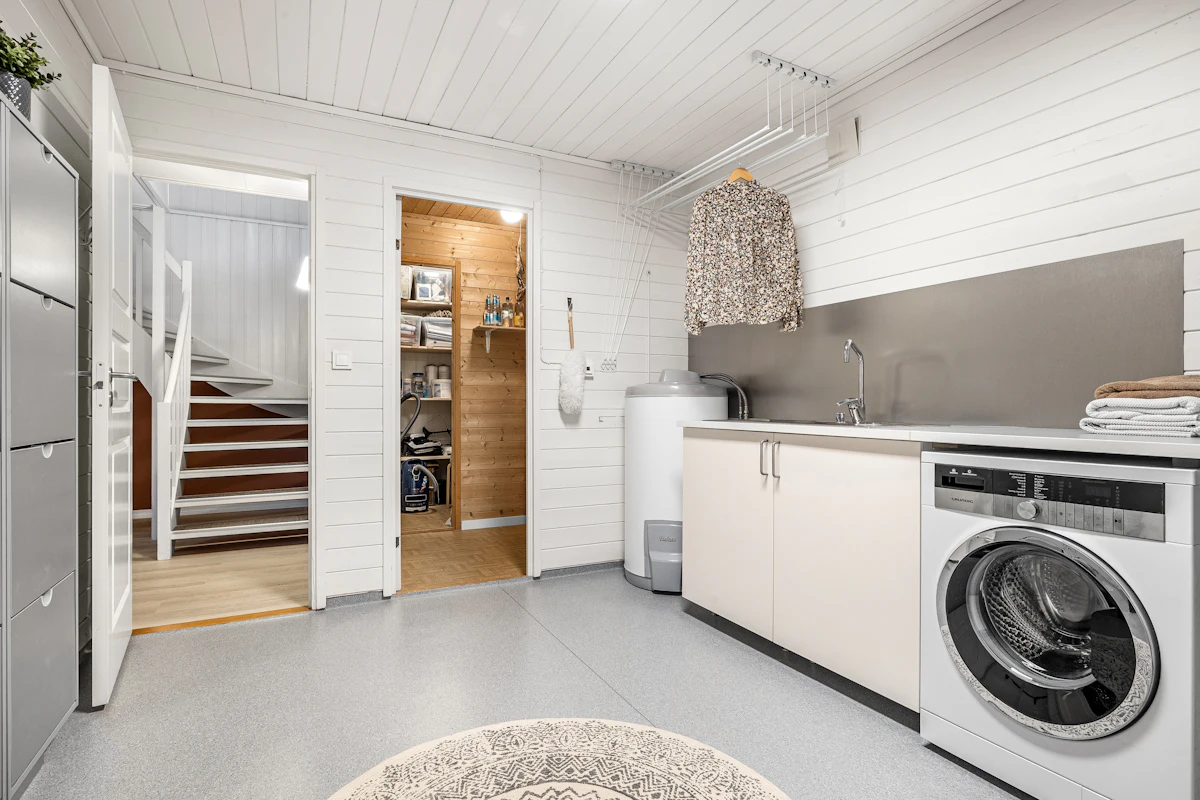
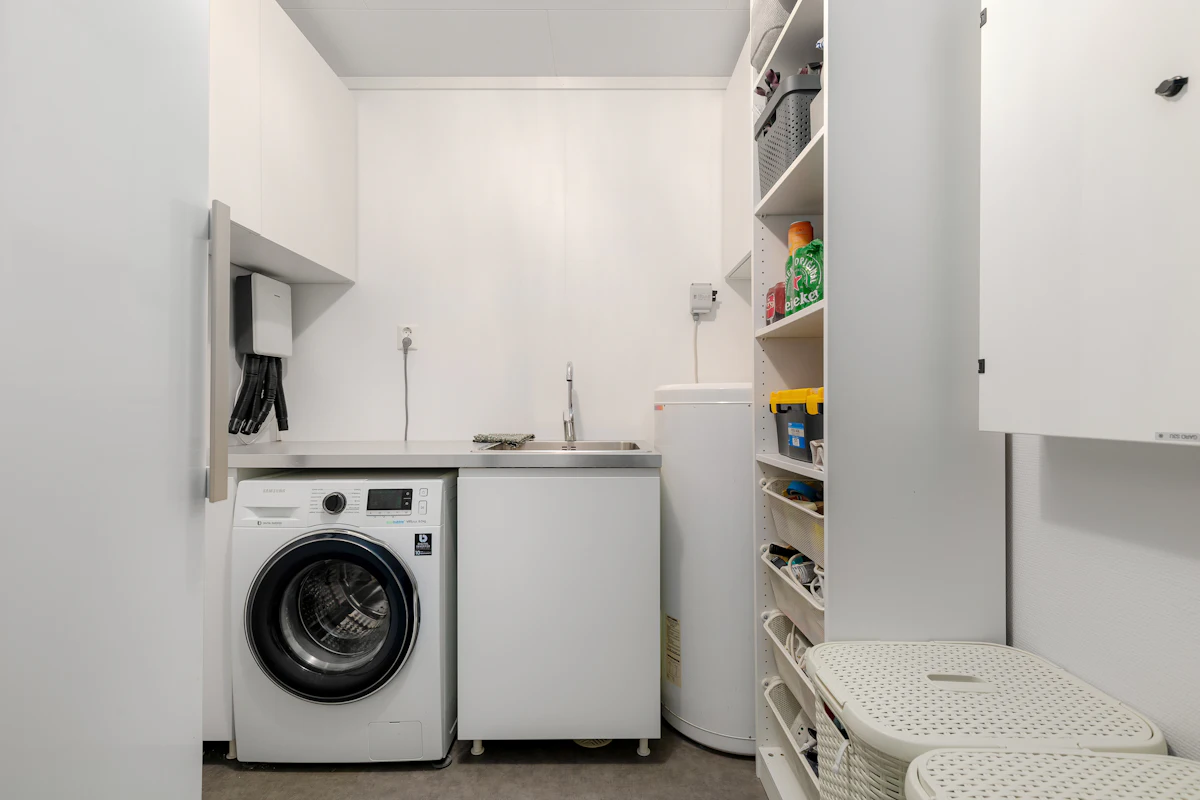
The final photograph gives a wider view of the washer and dryer and the surrounding laundry area; it does not show a person cleaning. Use this view as a reminder to look at the whole room before leaving it. Start by taking away the finished laundry basket and putting folded clothes in their proper places so neither the floor nor the appliance tops becomes permanent storage. Return detergent containers to secure storage, with their original labels and closures intact, and clean up any drips using the product instructions. Remove lint from the dryer’s lint filter as directed by its manual, and check that vents and appliance doors remain unobstructed. Where the manufacturer recommends it, allow a front-loading washer to air out after a cycle while keeping children from accessing the machine; ENERGY STAR’s clothes-washer guidance discusses moisture and maintenance. Finally, put the drying rack away once the clothes are dry and make sure the walkway is clear. This quick end-of-load routine is different from a deeper weekly clean; you can combine that larger reset with our Sunday reset ideas. A functional laundry room is one that is ready for the next load.
Practical Tips Before You Buy Storage
A small space becomes easier to use when every addition solves a specific problem. Before buying a cart, shelf, or organizer, test your normal wash-day routine and check these details.
- Measure door swings and clearances around the washer and dryer, and follow the manufacturer’s ventilation requirements.
- Secure detergents in their original packaging in a cabinet or closet inaccessible to children and pets.
- Choose a hamper that fits the usable floor space instead of keeping multiple large baskets in the walkway.
- Keep clean linens away from damp areas and cleaning chemicals.
- Choose folding and drying locations that do not block doors, vents, cords, or emergency exits.
- Finish each load by putting items away, cleaning up spills, and checking appliance maintenance requirements.
Final Thoughts
A tidy laundry room is not defined by expensive shelves or matching bottles. It works when your appliances have the clearance they need, supplies are safely stored, baskets are easy to use, and clean clothes have somewhere to go. Begin with one helpful change, such as moving detergent into a secure cupboard or creating a dedicated sorting basket. Then make a small reset part of each laundry day. A practical space that stays clear is more useful than a photo-perfect room you cannot comfortably use.
Useful Resources and Photo Credits
- American Cleaning Institute: Laundry Safety Tips — original-container storage and household precautions.
- American Cleaning Institute: Laundry Basics — sorting, labels, washing, and folding.
- ENERGY STAR: Clothes Washers — maintenance and air-drying guidance.
- Unsplash License — photo licensing for commercial/editorial reuse.
- Photo credits (each photograph linked to its original source): Lisa Anna; Alex Tyson; American Cleaning Institute; Annie Spratt; Amanda Selby; Florencia Simonini; Paul Zoetemeijer; Alex Tyson. Images are cropped to 3:2 and optimized as WebP.
You May Also Like
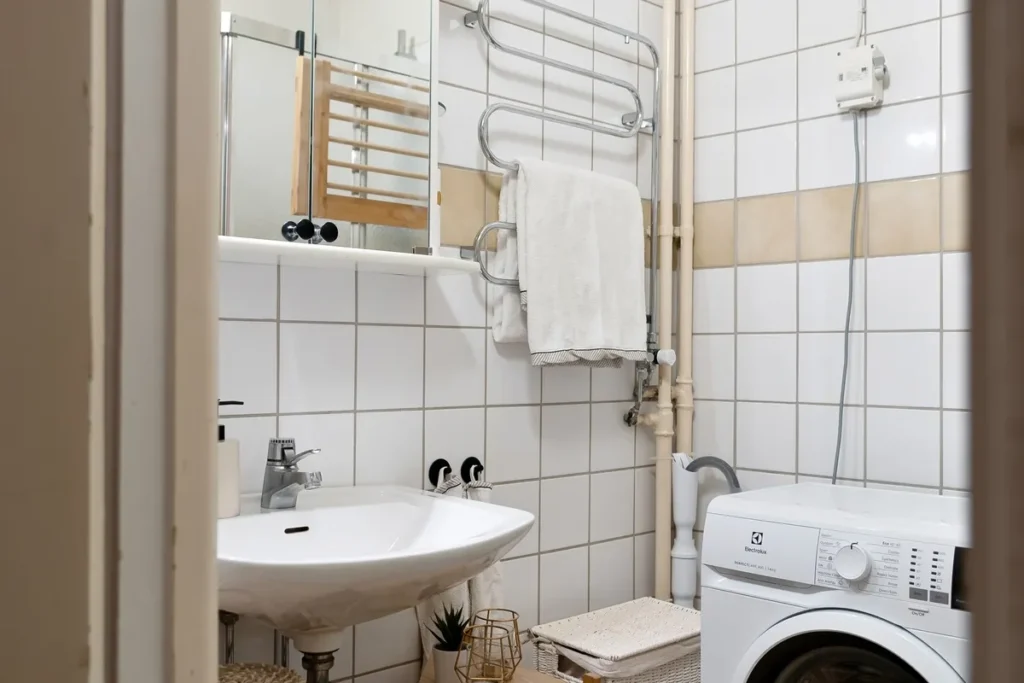
7 Beautiful Small Bathroom Storage Ideas for a Tidy Space
Keep another hardworking space organized with practical shelves, baskets, and compact storage choices.