7 Beautiful Small Kitchen Countertop Organization Ideas
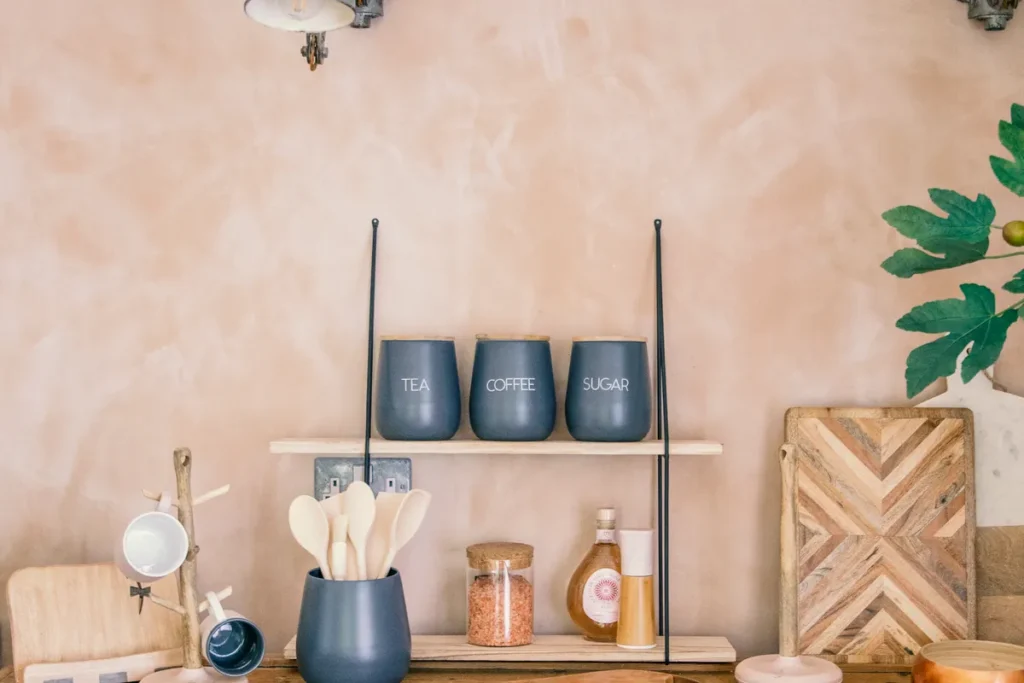
7 Beautiful Small Kitchen Countertop Organization Ideas
These small kitchen countertop organization ideas focus on practical, beautiful details that make the most of limited space—from clear jars and a compact coffee station to herb pots and a simple fruit bowl. You do not need to buy everything at once. Start by keeping the tools you use most within reach and leaving as much open preparation space as possible.
Clear one work surface before setting up a coffee corner or moving frequently used utensils closer to where you cook.
1. Organize Everyday Dry Goods in Clear Glass Jars
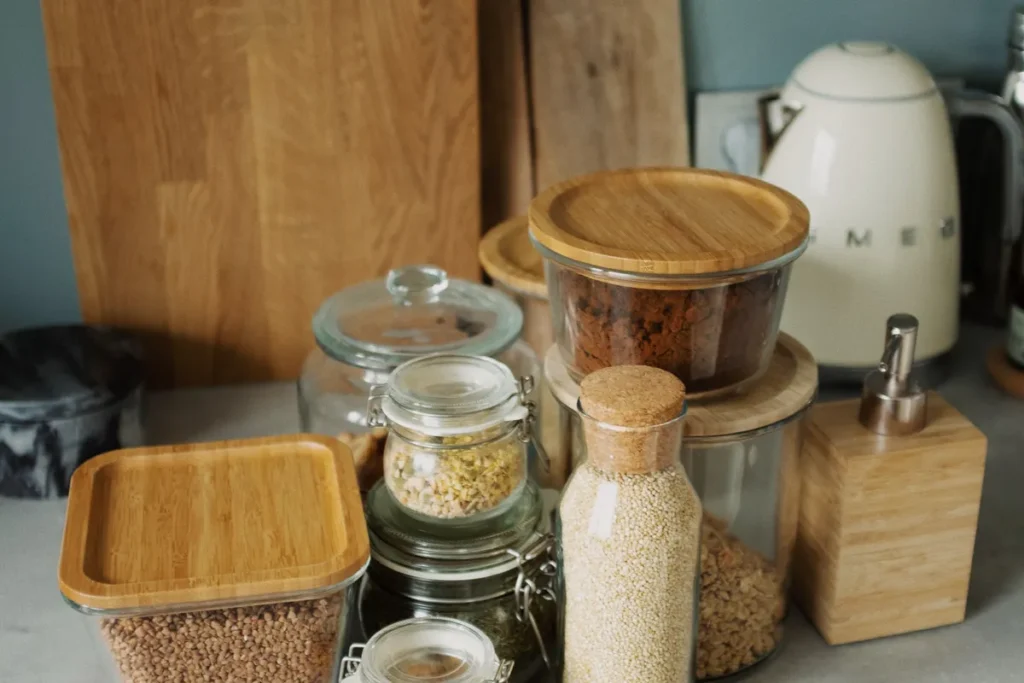
Choose a few food-safe, clean, completely dry jars for ingredients you use frequently, such as oats or rice, and select lids that close securely. Arrange taller jars behind shorter ones so each label remains easy to read. You do not have to transfer everything into matching containers—start with only the items that truly need convenient access. When decanting packaged food, keep the original best-by date, ingredient information and allergen details available. The IKEA countertop organization guide also suggests clear jars for creating a calm, coordinated look.
2. Stand Wooden Cutting Boards Upright
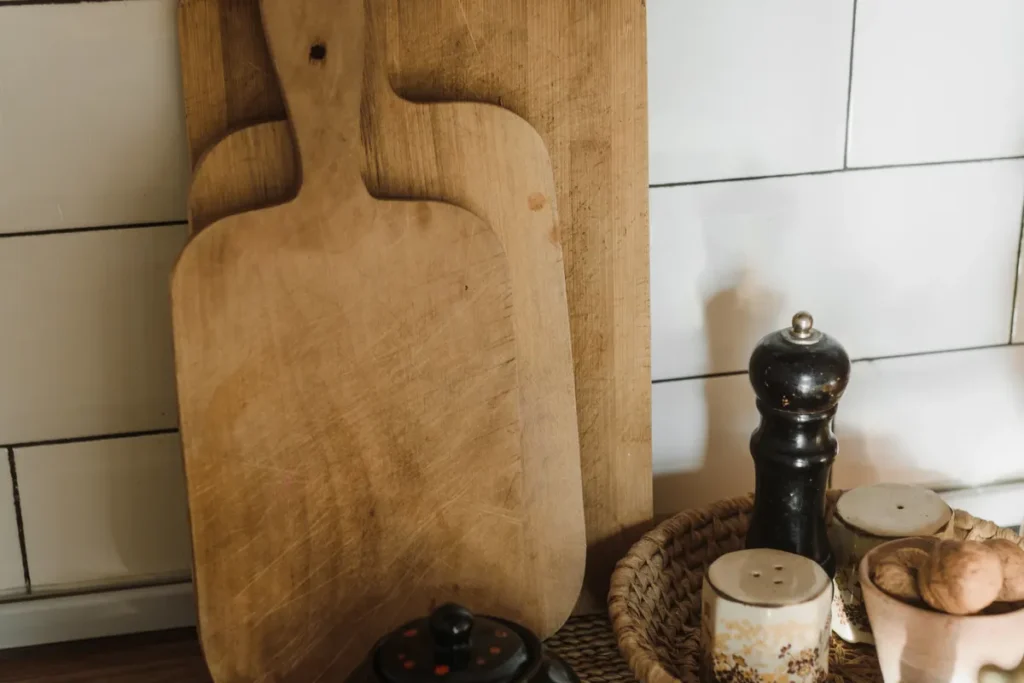
If you use boards regularly, place one or two upright in a stable holder or against a secure, dry area of the backsplash where they will not slide. Make sure every board is fully clean and dry before storage, especially after preparing raw ingredients, and never use decorative boards as a substitute for food-safe preparation surfaces. Leave enough counter space in front for chopping and food preparation. The natural wood adds warmth to pale cabinetry, but practicality comes first: if the boards crowd the sink or cooking zone, store them in a cabinet instead.
3. Keep a Compact Coffee Station in One Corner
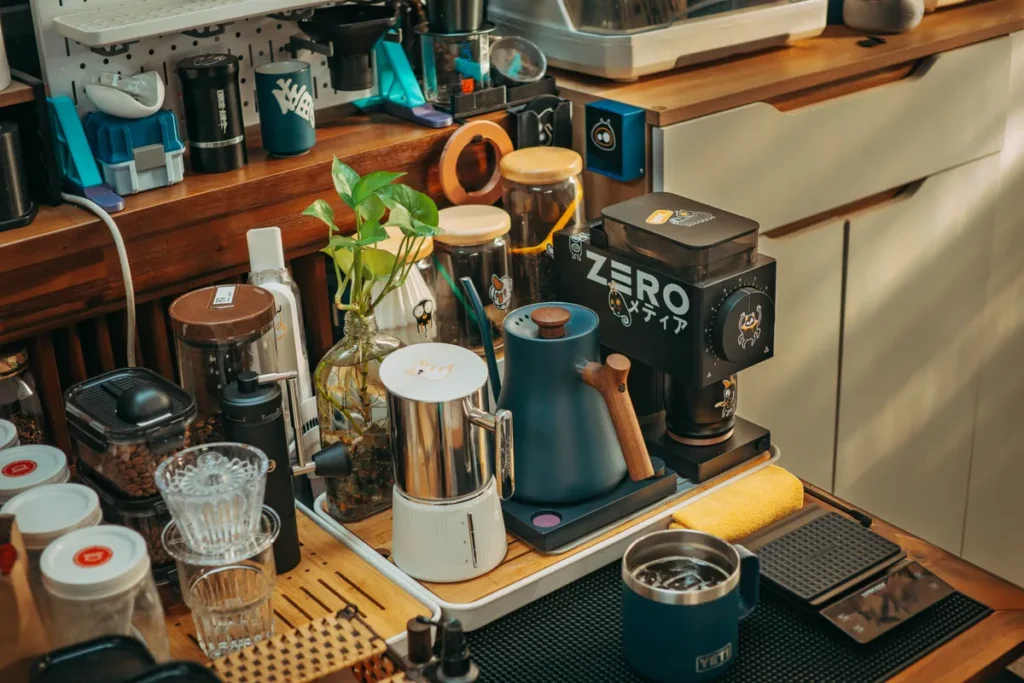
Choose a corner close to a suitable electrical outlet and keep just the coffee maker or brewer, a couple of regularly used mugs and the essential supplies within reach. A small tray can help corral loose tools, while spare cups and infrequently used accessories can go inside a cabinet. Leave the ventilation clearance recommended by your appliance maker, keep electrical items away from standing water and do not overload the outlet. If you prefer tea, the same setup works with a kettle, a few cups and tea supplies. The goal is a tidy routine, not an elaborate café-style display.
4. Bring Fresh Herbs to a Sunny Counter
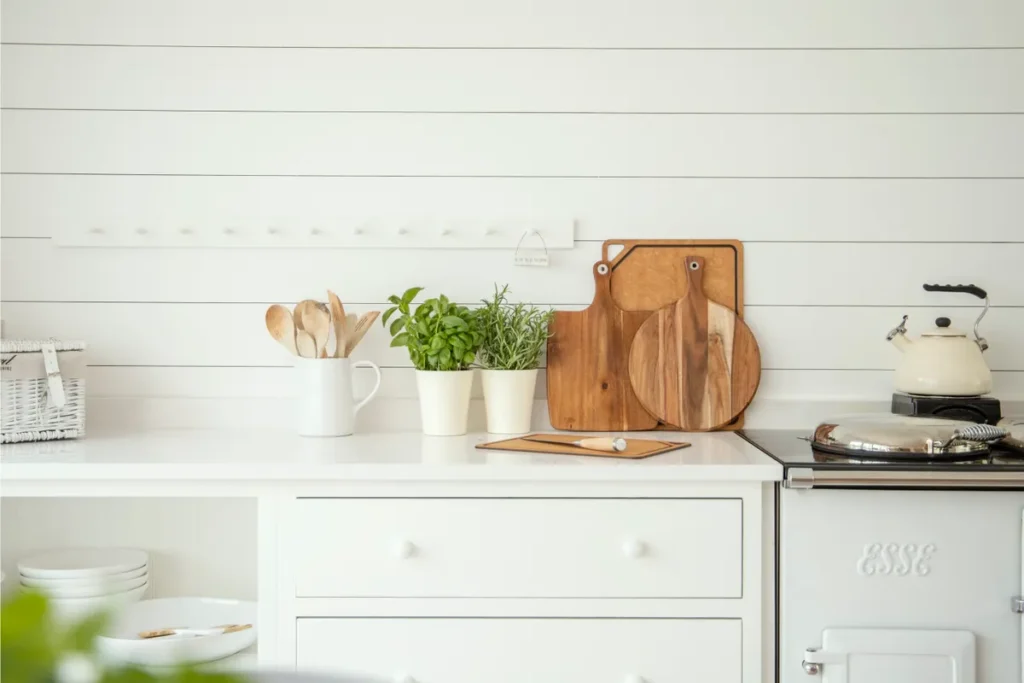
If your counter has enough natural light, place one or two appropriately sized herb pots where you can water them without soaking an outlet or wooden surface. Use saucers to catch excess water and check each plant’s needs, since herbs do not all require identical moisture or sunlight. Keep the pots away from direct burner heat and give the leaves room to grow. If your kitchen has little light or almost no free space, a single botanical print or a small faux plant may offer a similar decorative effect without taking up a food-preparation area.
5. Arrange Frequently Used Spices Together
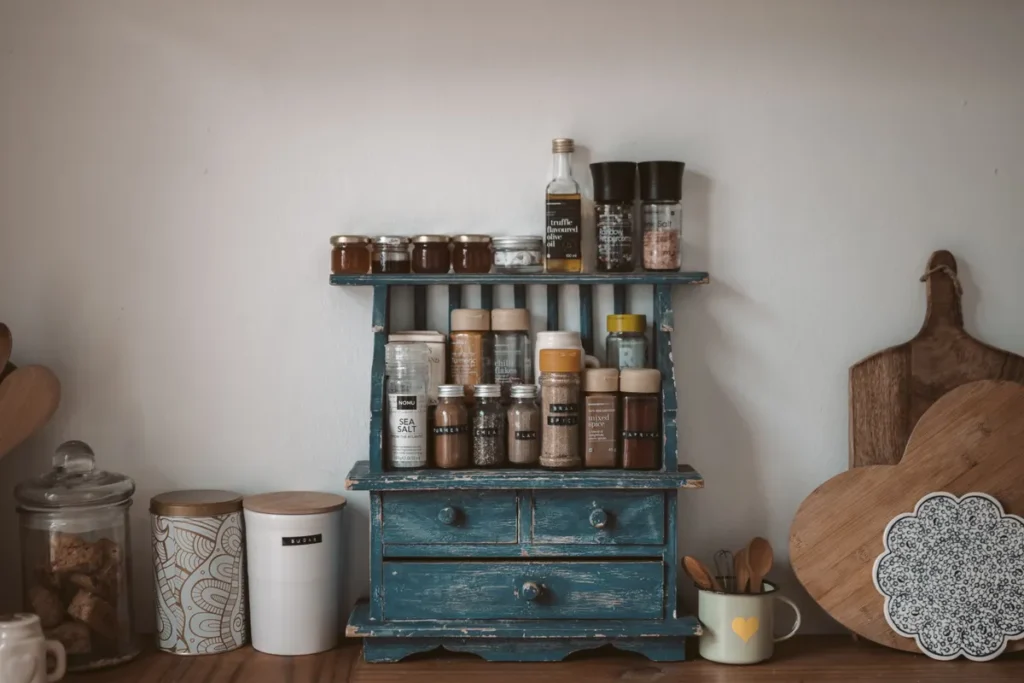
Keep the seasonings you reach for often together in a stable rack or low-sided tray rather than spreading jars across the whole counter. Arrange them by how you cook—everyday basics at the front and less-used items toward the back—and check that labels are readable. Heat, sunlight and moisture can affect food quality, so avoid putting spice jars directly beside a stove or steamy sink. You can store most of your collection inside a cupboard and keep only a few current favorites outside. The IKEA kitchen organization recommendations suggest grouping spices by use to save time and space.
6. Add a Simple Fruit Bowl as Functional Decor
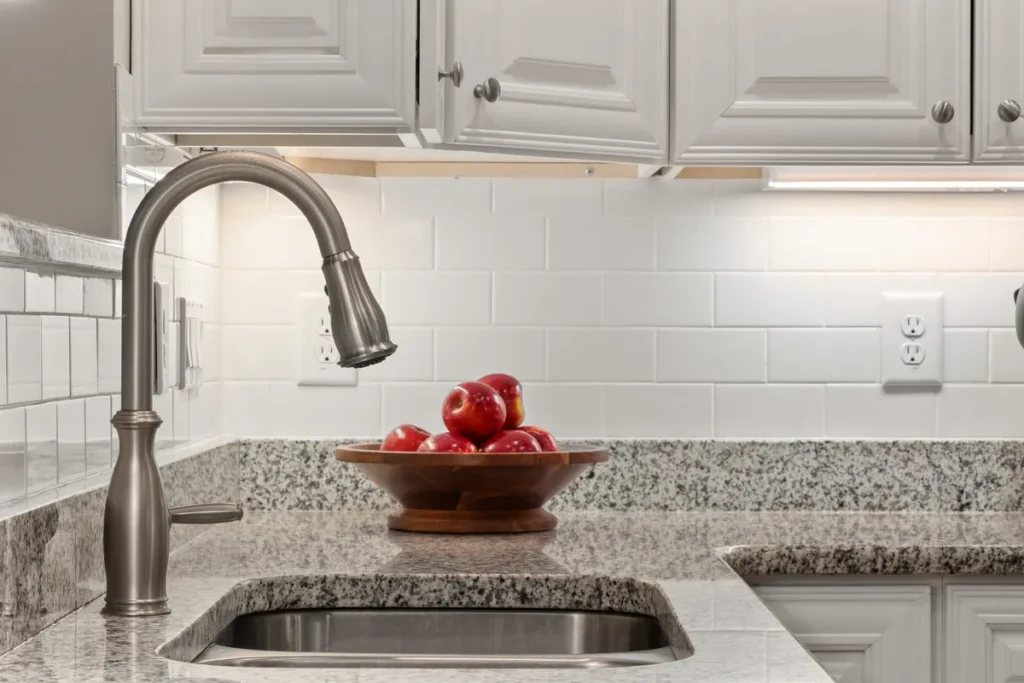
If your household regularly eats fresh fruit, a small, easy-to-clean bowl can be a practical centerpiece on an unused section of counter. Choose produce that can be stored at room temperature and follow the storage guidance for the particular fruit; some items last better refrigerated. Wash produce before eating or preparing it rather than leaving washed, damp fruit sitting out for long periods. Keep the bowl out of cooking splashes and leave enough room around the sink for washing dishes. This approach adds color without introducing decorative clutter you must dust or move every day.
7. Give Wooden Utensils a Dedicated Holder
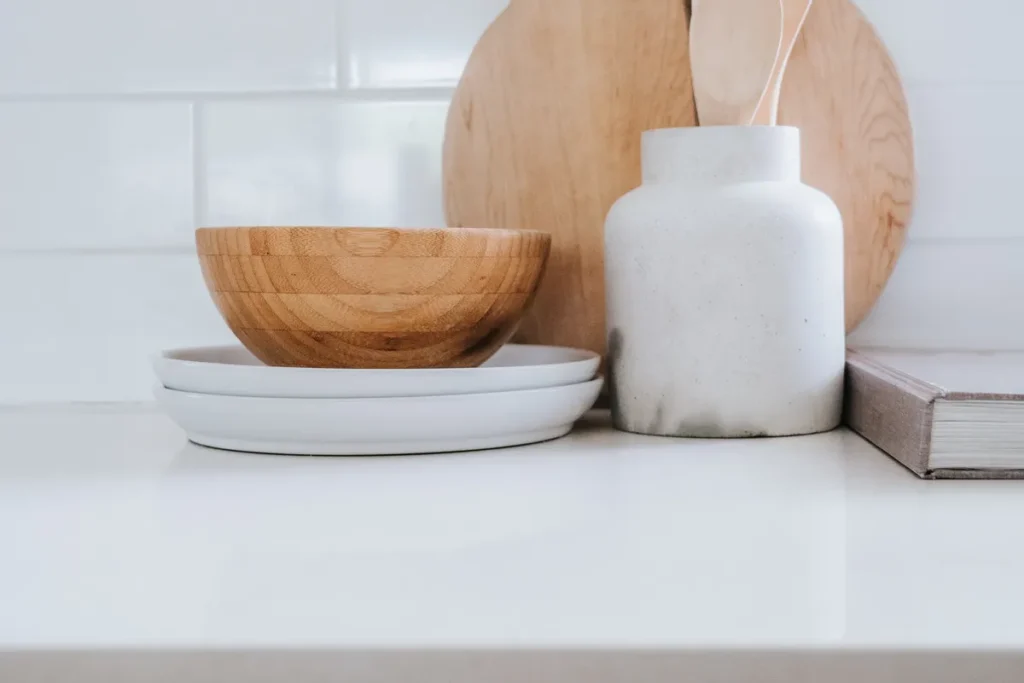
Select a sturdy, washable utensil crock that fits the number of spatulas, stirring spoons and other everyday tools you actually need. Position it within comfortable reach of your preparation area but far enough from burners that handles cannot heat up or catch. Let washed utensils dry completely before returning them to a crowded container, and keep anything rarely used in a drawer. Neutral ceramics and wood look beautiful together, but there is no need to purchase a matching set. A small, intentional grouping is often enough to make a small kitchen countertop feel both useful and welcoming.
Practical Tips Before You Organize Your Kitchen Counter
Begin by clearing your countertop and separating everyday essentials from tools you use only occasionally. Measure the remaining usable area before choosing containers, and protect the space around your sink, stove and food-preparation surface. The IKEA kitchen counter organization guide advises grouping supplies by task, using trays and choosing vertical storage where appropriate. Keep food containers and tools clean, follow appliance clearances and avoid crowding electrical outlets. A quick wipe-down and putting items back in place can help maintain your arrangement. For another compact-space project, visit our small entryway organization ideas.
Final Thoughts on Small Kitchen Countertop Organization
A beautiful kitchen counter does not need to be filled with new organizers or decorative accessories. The most successful setup gives you enough room to prepare food, keeps everyday items easy to find and adds only a few details you genuinely enjoy. Start with one small zone—perhaps a utensil holder or a few clear jars—then move anything that feels crowded back into a cabinet. When function comes first, a tidy kitchen often feels more welcoming too.
Useful Official Home Organization Resources
For practical guidance on kitchen work zones, countertop trays, jars and clutter reduction, see IKEA’s kitchen countertop organization guide and IKEA’s kitchen planning resource center. For basic safe food handling and storage, use FoodSafety.gov’s guidance on fruits and vegetables. All editorial images were sourced from Pexels under the Pexels license.
You May Also Like
HOME
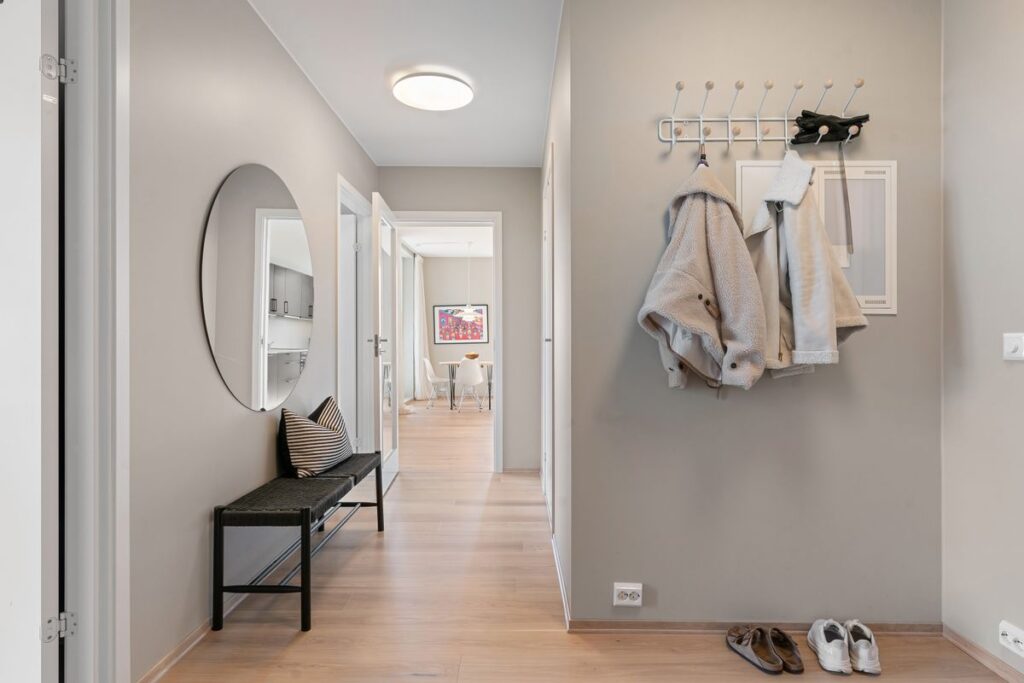
7 Beautiful Small Entryway Organization Ideas for a Tidy Home
Find more simple ways to make a small home feel tidy, welcoming and practical.