7 Easy Fresh Flower Arrangement Ideas for Beginners
7 Easy Fresh Flower Arrangement Ideas for Beginners
These easy fresh flower arrangement ideas for beginners show seven simple ways to style cut flowers using jars, clear vases, mixed bouquets and small grouped displays. You do not need florist training or expensive supplies to begin. With a clean container, a few carefully chosen stems and some practical care, you can make a lovely handmade arrangement for a table, shelf or cozy corner at home.
If you only have a few stems, divide them among bud vases. If you have a single bunch of tulips, one vase is enough.
1. Arrange Fresh Flowers in a Simple Glass Jar
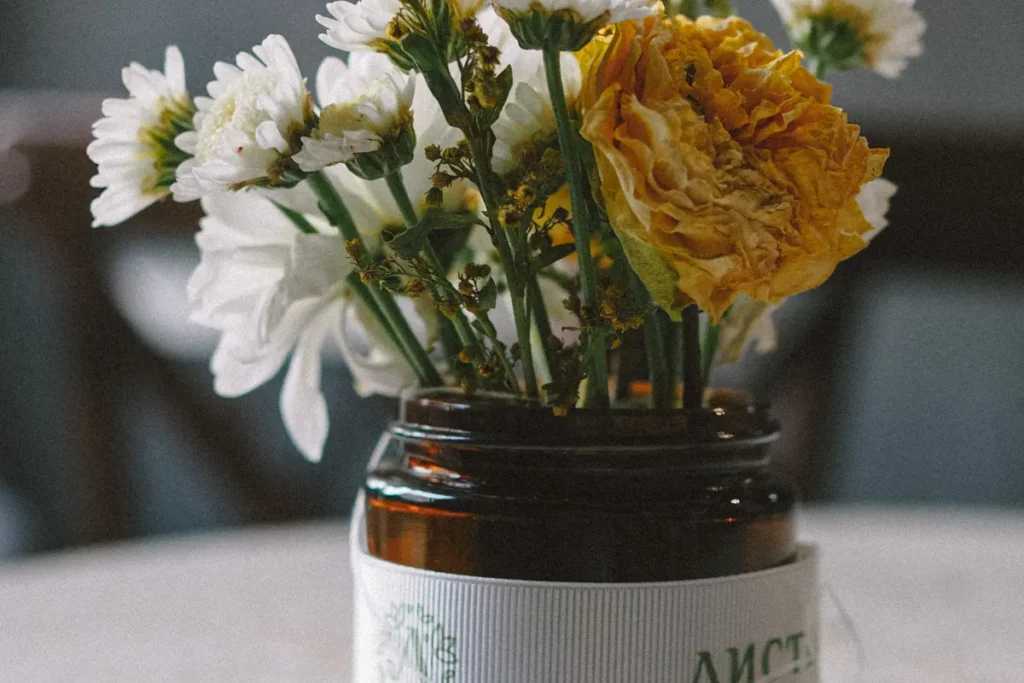
Start with a clean, sturdy jar, add fresh water and trim the stems to slightly different lengths so the flowers do not all sit in one straight line. Place a few taller blooms in the center and shorter ones toward the rim, turning the jar as you work to keep the arrangement balanced. Choose flowers with stems sturdy enough to stand comfortably in the opening, and remove any leaves that would sit below the waterline. A simple jar arrangement is especially useful when you have a small bunch from a market and do not want to buy an expensive vase.
2. Create a Minimalist Display with Bud Vases
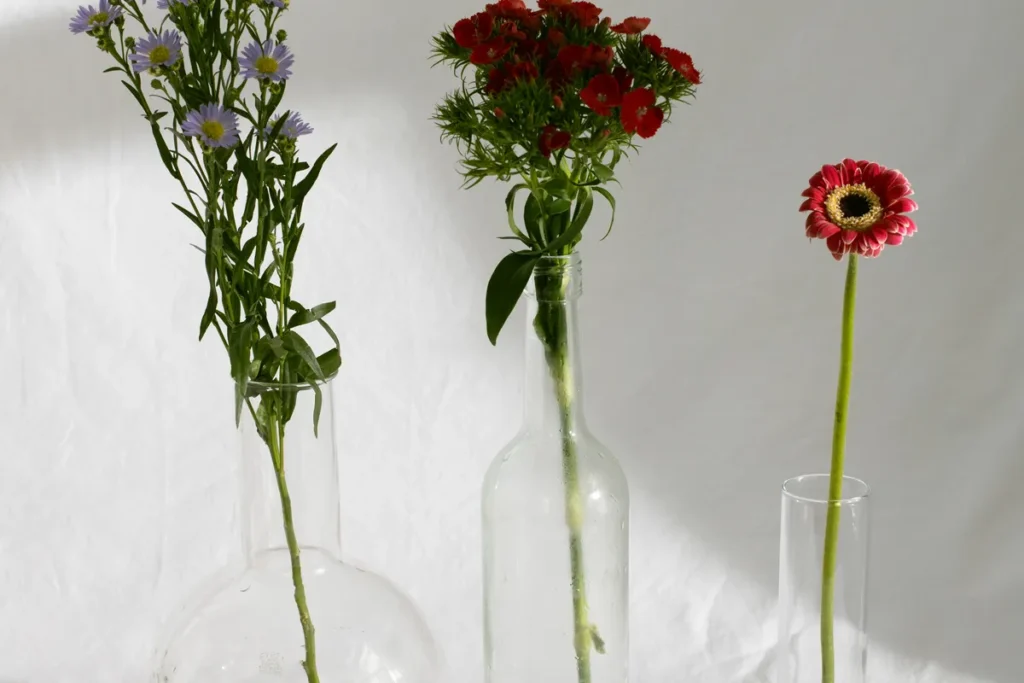
The clear bud vases holding individual gerbera daisies, asters and carnations in this photograph illustrate a beautiful approach when you only have a few stems. Instead of crowding them into one container, spread the flowers across two or three small, clean vases. Vary the heights and shapes slightly, but leave a little breathing room between each display. Cut stems so they sit securely and do not tip the lightweight glass containers. This works particularly well on a windowsill, narrow shelf or small dining table, provided the vases are away from a precarious edge. Keep enough water in every vase and check it regularly, since smaller containers can run low more quickly.
3. Let a Simple Tulip Bouquet Stand Out
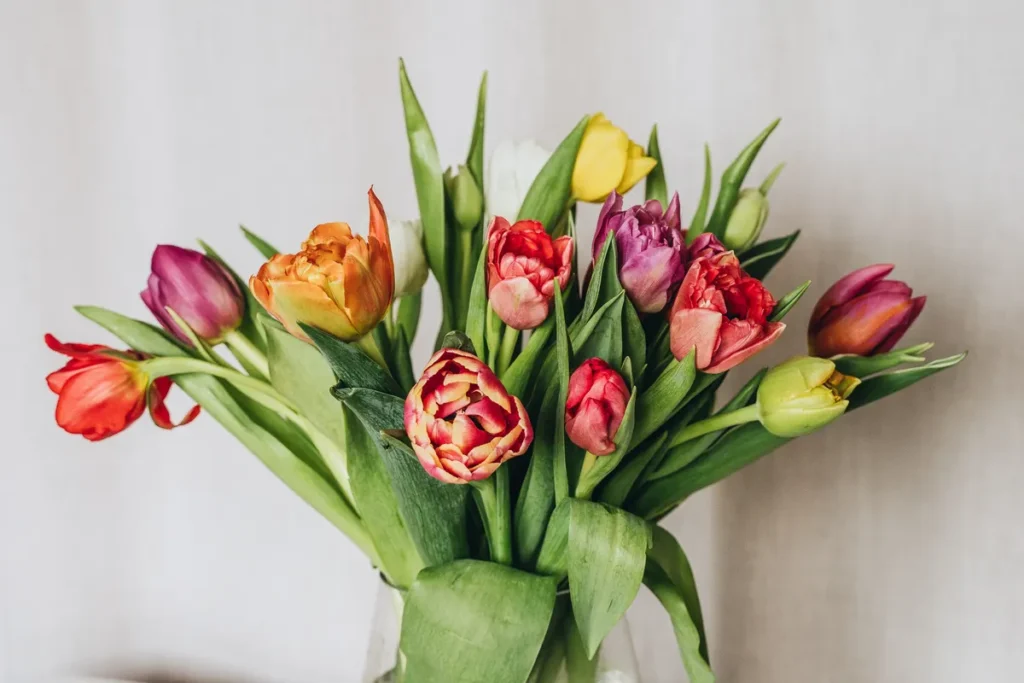
Choose tulips with firm stems and flowers that are not already deteriorating, then place them in a clean vase with enough room to spread naturally. Tulips may continue to grow and bend after cutting, so a slightly loose, flowing shape can be part of the charm. Trim stems with clean tools and keep the display away from direct heat or strong sun. If the bouquet begins leaning to one side, rotate the container or adjust a few stems instead of forcing every flower to stand upright. The result feels fresh, understated and easy to personalize by color.
4. Mix Garden Flowers for a Relaxed Bouquet
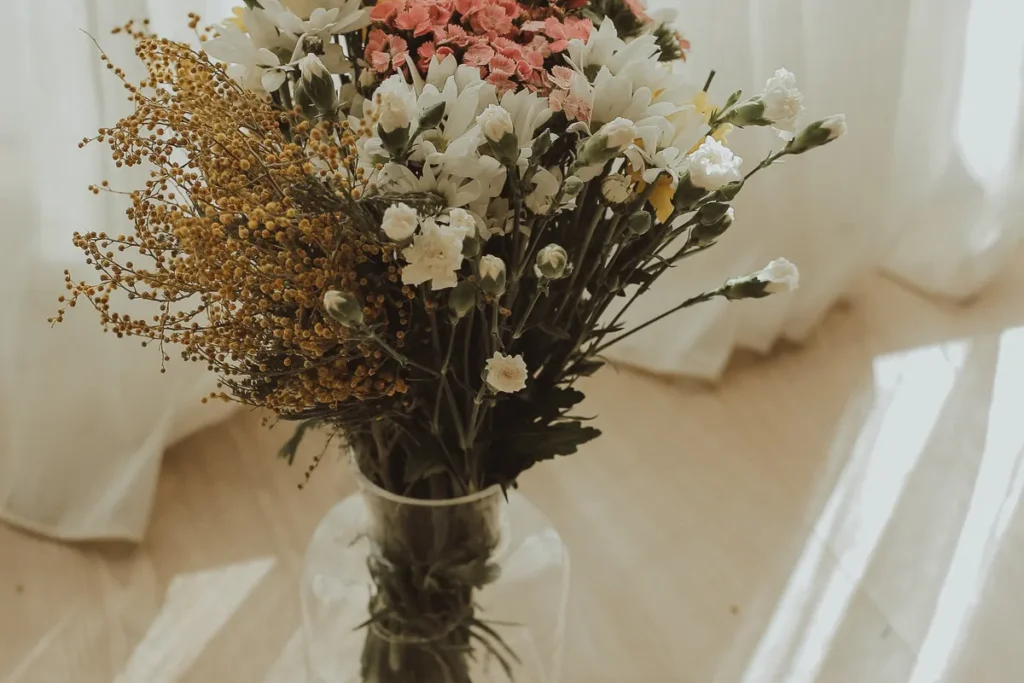
Select a small variety of flowers with different shapes: one or two larger focal blooms, a few medium blossoms and delicate filler stems to soften the edges. Begin with the tallest stems, then work around the vase with shorter flowers, adjusting each one rather than trying to create a perfectly symmetrical shape. A narrow color palette helps an assortment feel intentional, but contrasting colors can also work when repeated across the bouquet. Keep leafy stems above the waterline and avoid overfilling the vase, which makes it difficult to see or adjust individual flowers.
5. Style an Artistic Arrangement in One Vase
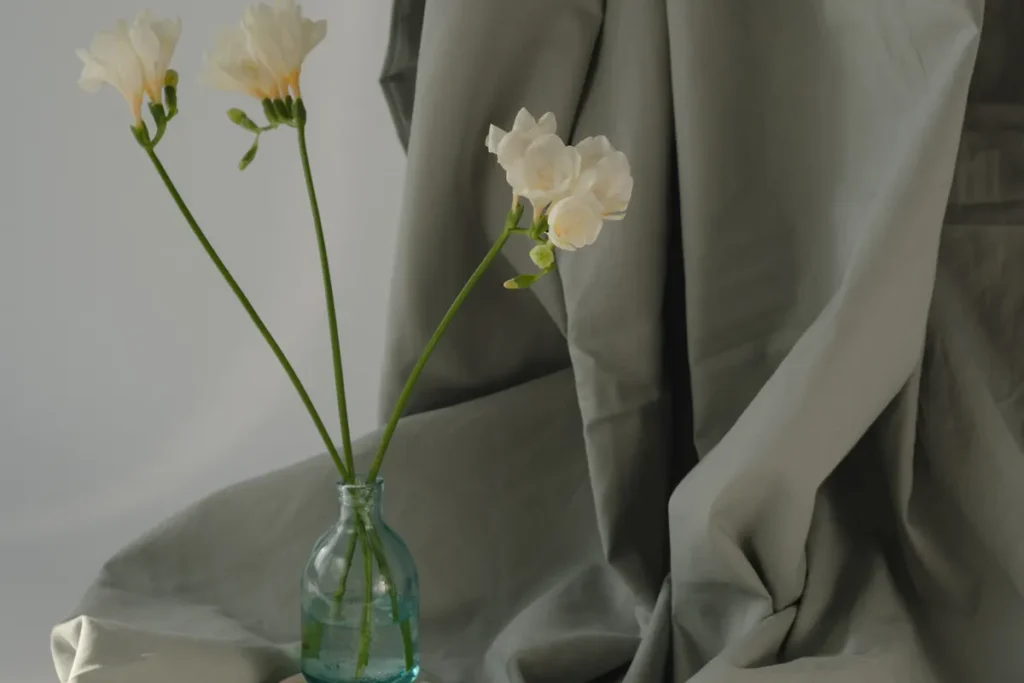
Start with a container that has a stable base and use only a few stems with different heights or graceful curves. Turn the vase while positioning the flowers so the overall shape feels balanced from your preferred viewpoint. Rather than packing in extra blooms, let the space around each flower become part of the design. A neutral tablecloth or simple book nearby can complement the display without competing with it. Keep fabrics away from any water spills, and place the arrangement where it will not be knocked over.
6. Combine Roses and Tulips in Soft Colors
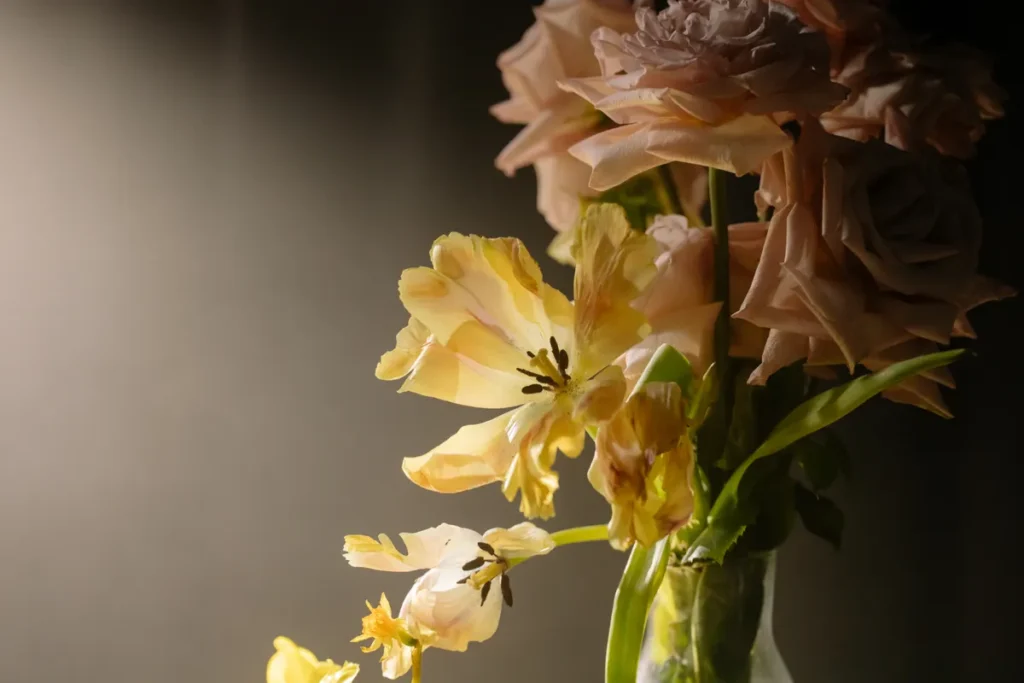
Choose pink roses and yellow tulips that are similarly fresh. Alternate them throughout the vase so both colors show from different angles. Begin with a few roses to establish the shape, and add tulips in the gaps so their longer stems introduce movement. Remove leaves that would be submerged, and adjust the arrangement after placing it on your table to make sure the taller blooms do not obscure everything else. Mixed bouquets can mature at different rates, so take out fading stems promptly. If you have pets, check plant safety before bringing particular flowers indoors.
7. Group Several Small Vases for a Table Centerpiece
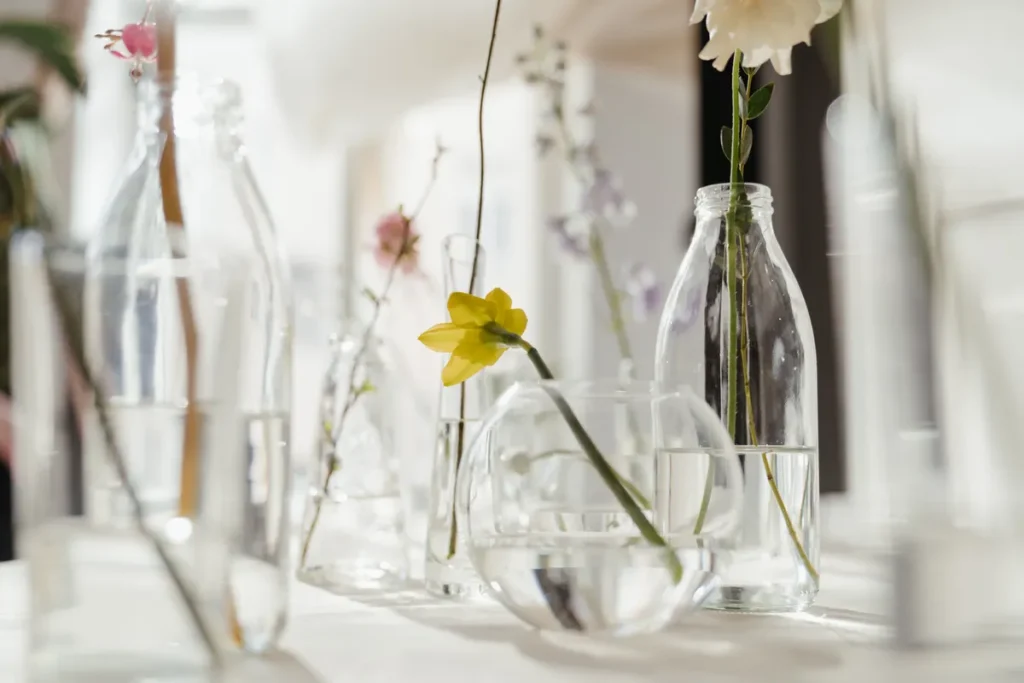
Gather three or more small vessels with compatible proportions, fill each with fresh water and give every vase a few stems. Repeat one flower color or shape across the grouping to connect the display visually. Place the tallest vase slightly off center, then position lower ones where guests can still see and talk comfortably across the table. Use a washable tray if the surface is delicate and leave enough room for dishes or daily activities. When the flowers fade, replacing individual stems is often easier than rearranging a full centerpiece.
Practical Tips Before You Arrange Fresh Flowers
Start with a clean vase, fresh water, clean cutting tools and a stable work surface. Remove leaves that would sit below the waterline and cut stems to a length that suits the container. The Royal Horticultural Society’s cut-flower guidance advises checking water levels regularly, changing water and re-cutting stems every two to four days, removing fading blooms and placing arrangements away from direct heat. Follow flower-food directions when provided and keep arrangements away from pets or children if the plants may be harmful. If you prefer long-lasting floral craft projects, explore our pressed flower crafts for beginners.
Final Thoughts on Easy Flower Arrangements
Fresh flower arranging is a simple creative activity that can make a table or quiet corner feel more personal. Begin with a handful of stems and a vase you already own, then practice changing heights, colors and spacing until you like the result. An imperfect bouquet can still be beautiful. Clean containers, fresh water and a little attention to the flowers help you enjoy your handmade display for longer.
Useful Official Flower Care Resources
For evidence-based care of freshly cut flowers, read the Royal Horticultural Society’s guide to cutting and conditioning flowers. For plant safety around animals, consult the ASPCA’s toxic and non-toxic plants database before choosing flowers for a pet-friendly home. The editorial photographs were sourced from Pexels under the Pexels license, which permits editorial blog use.
You May Also Like
CRAFTS
7 Beautiful Handmade Home Decor Crafts for Beginners
Discover more hands-on ideas, from macramé and embroidery to pretty painted planters.